
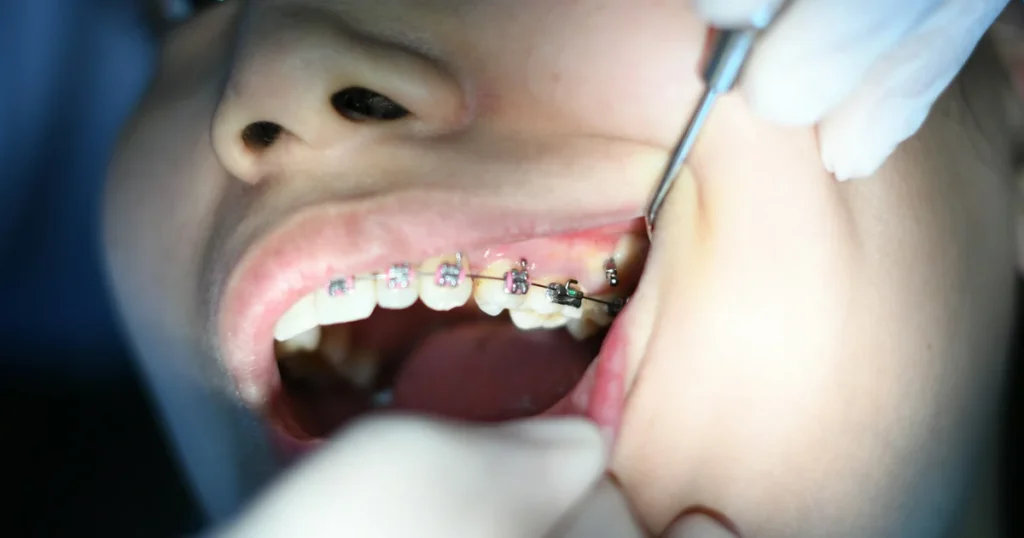
Orthodontics is the area of dentistry that diagnoses, prevents and treats problems with how teeth are lined up and how the upper and lower teeth bite together. Treatment uses steady, gentle force to move teeth into better positions over time.
The two best-known options are orthodontic braces, which use brackets and a wire fixed to the teeth, and clear aligner treatment, which uses a series of removable plastic trays. Both are common crooked teeth solutions, and both can help with crowding, gaps and certain bite problems.
Orthodontic care may improve how your teeth line up, how they work when you chew and how your smile looks. It can suit children, teenagers and adults, based on their dental development and needs. Results vary, and not every jaw problem can be fixed with braces or aligners alone. At Sky Dental Centre in Thunder Bay, an orthodontic assessment is the first step to finding out what is possible for you.
What Dental Problems Can Orthodontic Treatment Correct?
Orthodontic treatment can correct crooked teeth, crowding, gaps, overbites, underbites, crossbites, open bites and teeth that stick out. Some problems involve the jaw as well as the teeth and may need extra treatment.
Crooked or misaligned teeth
Teeth can come through at an angle or shift over time. Braces and aligners gradually move them into straighter positions.
Crowded teeth
When the jaw does not have enough room, teeth overlap or twist. Treatment can create or redistribute space and line the teeth up.
Gaps between teeth
Spaces can come from small teeth, missing teeth or jaw growth. Treatment can close gaps or move space to where it is needed.
Overbite
Some overlap of the upper front teeth over the lower ones is normal. When the overlap is excessive, treatment can help improve it.
Underbite
In an underbite, the lower front teeth sit in front of the upper teeth. Treatment depends on whether the cause is tooth position, jaw size or both.
Crossbite
A crossbite is when some upper teeth bite inside the lower teeth. Many crossbites can be corrected with orthodontic treatment.
Open bite
An open bite is when some upper and lower teeth do not meet when you close your mouth. The cause and severity guide treatment.
Protruding teeth
Front teeth that stick out can be moved back when there is space and the bite allows it.
| Orthodontic Problem | Description | Potential Treatment Goal |
| Crooked teeth | Teeth out of alignment | Improve tooth position |
| Crowding | Not enough space for teeth | Create or redistribute space and align teeth |
| Spacing | Gaps between teeth | Close or redistribute spaces |
| Overbite | Too much vertical overlap of front teeth | Improve vertical bite relationship |
| Underbite | Lower front teeth ahead of upper teeth | Improve bite alignment when feasible |
| Crossbite | Upper teeth bite inside lower teeth | Correct affected tooth or jaw relationships |
| Open bite | Some upper and lower teeth do not meet | Improve tooth contact and bite function |
| Protruding teeth | Teeth extend forward | Improve position and bite relationships |
Some complex jaw problems need treatment beyond braces or aligners, such as surgery planned with a specialist. An examination is needed to find the right approach.
What Are the Different Types of Orthodontic Treatments?
Orthodontic treatments include metal braces, ceramic braces, clear aligners, lingual braces, specialized appliances and retainers. Your teeth, goals, hygiene habits and how well you can follow instructions all shape the right choice.
Metal braces
Metal brackets are bonded to the teeth and linked with a wire that guides them into place. Metal braces can treat a broad range of alignment and bite problems.
Ceramic braces
Ceramic braces work the same way but use tooth-coloured brackets that are harder to see. They can be more fragile and often cost more.
Clear aligners
Clear aligners are custom-made, removable trays worn in a set order. Clear aligner treatment can suit many mild to moderate cases and some more complex ones, based on the system and the clinician’s assessment. Learn more about Invisalign.
Lingual braces
Lingual braces are fixed to the back of the teeth, so they are hidden from the front. Not every case suits them, and availability varies.
Expanders and other appliances
Some appliances widen a narrow upper jaw or guide jaw growth. They are most useful in children and teenagers who are still growing.
Retainers
Retainers hold teeth in their new positions after braces or aligners. They can be removable or a thin wire fixed behind the front teeth. Retainers keep results in place; they do not replace full treatment.
| Treatment Option | Main Characteristics | Patient Considerations |
| Metal braces | Fixed brackets and wires | Can address many alignment and bite problems |
| Ceramic braces | Fixed braces with less noticeable brackets | Appearance, maintenance and cost considerations |
| Clear aligners | Removable transparent trays | Need consistent wear and suitable case selection |
| Lingual braces | Brackets behind the teeth | Extra comfort, cost and availability considerations |
| Orthodontic appliances | Devices for specific dental or jaw concerns | Suitability depends on diagnosis and growth |
| Retainers | Fixed or removable retention devices | Help maintain alignment after treatment |
No single treatment is best for everyone.
How Do Braces and Clear Aligners Straighten Teeth?
Braces and clear aligners straighten teeth by applying light, steady pressure. The bone around each tooth slowly reshapes in response, letting the tooth move a little at a time.
How tooth movement works
Each tooth sits in a socket held by a ligament. Under gentle pressure, bone breaks down on one side of the root and rebuilds on the other. This natural remodelling is what allows teeth to move.
How orthodontic braces work
The wire is threaded through brackets on each tooth. As it tries to return to its shape, it guides the teeth toward their planned positions. Wires and elastics are adjusted or changed at regular visits.
How clear aligner treatment works
You wear a series of trays, each shaped slightly differently from the last. Each set moves the teeth a small step further. Aligners usually need to be worn about 20 to 22 hours a day.
| Comparison | Traditional Braces | Clear Aligners |
| Appearance | Visible brackets and wires | Transparent removable trays |
| Removability | Fixed to the teeth | Removed for meals and cleaning |
| Treatment approach | Brackets and wires guide tooth movement | Sequential aligners guide tooth movement |
| Daily maintenance | Cleaning around brackets and wires | Cleaning teeth and aligners |
| Eating restrictions | Some hard or sticky foods should be avoided | Aligners are removed before eating |
| Patient compliance | Appliances stay attached | Must be worn consistently every day |
| Suitability | Can address a broad range of cases | Depends on case complexity and planning |
| Follow-up | Regular adjustments and progress checks | Regular monitoring and aligner changes |
Which option suits you?
Your dentist will consider:
- How misaligned your teeth are.
- The type of bite problem.
- Dental and jaw development.
- Oral hygiene habits.
- Your preferences.
- Whether you can follow wear instructions.
- Cost.
- A professional assessment.
Both orthodontic braces and clear aligners have strengths and limits. Neither is guaranteed to be faster, more comfortable or more effective.
How Long Does Orthodontic Treatment Usually Take?
Most full orthodontic treatment takes around 12 to 24 months, although minor changes can take less time and complex cases can take longer. The NHS notes that treatment usually takes between 6 and 30 months, depending on how complicated it is.
What affects the timeline
- Severity: large amounts of crowding, spacing or complex bite problems need more time.
- Appliance and plan: the approach affects the order and length of treatment. Aligners are not always quicker than braces.
- Age and growth: treatment works at any age, but growth in younger patients can open up options.
- Following instructions: wearing aligners and elastics, caring for appliances and keeping appointments all keep treatment on schedule.
- Oral health: cavities, inflamed gums or broken appliances can cause delays.
- Regular visits: check-ups let your clinician track progress and make changes.
| Treatment Stage | What Patients Can Expect |
| Initial consultation | Assessment of alignment, bite and goals |
| Diagnostic planning | X-rays, scans or impressions when needed |
| Appliance placement | Braces fitted or first aligners provided |
| Active treatment | Gradual tooth movement and regular reviews |
| Treatment completion | Braces removed or aligner series finished |
| Retention phase | Ongoing retainer wear to hold alignment |
Teeth tend to drift after treatment, so retainers are usually needed afterward, often for the long term.
How Should You Care for Your Teeth During Orthodontic Treatment?
Brush carefully with fluoride toothpaste, clean between your teeth daily, look after your appliance and keep seeing your dentist. Braces and aligners trap plaque easily, which can lead to decay and white spots if cleaning slips.
Brushing with braces or aligners
Brush at least twice a day for two minutes. With braces, angle the brush above and below each bracket and along the gumline.
Cleaning between teeth
Use floss with a threader, interdental brushes or another tool your dentist recommends.
Caring for aligners
Clean aligners as instructed. Take them out to eat and drink anything except plain water, and brush before putting them back in when you can.
Foods to avoid with braces
Hard, sticky or chewy foods, such as nuts, toffee, popcorn and ice, can break brackets or bend wires.
Managing discomfort
Some soreness is normal for a few days after an adjustment or a new set of aligners. Orthodontic wax can cover rough spots, and your clinician can suggest pain relief.
Regular check-ups
Keep up your dental examinations and cleanings during treatment.
Sports
Wear a suitable mouthguard for contact sports to protect your teeth and appliance.
Broken appliances
Call your provider if a bracket comes loose, a wire pokes your cheek or an aligner cracks. Do not try to fix it yourself.
Follow instructions
Wear elastics, aligners and retainers exactly as prescribed.
Benefits and Limitations of Orthodontic Treatment
Orthodontic treatment can improve alignment, the bite and the look of your smile, but it also has risks and limits.
Possible benefits include straighter teeth, a better-fitting bite, some areas being easier to clean, a more even smile and, for some people, easier chewing. Treatment does not automatically prevent decay or gum disease.
Possible risks and limitations include:
- Temporary discomfort and tooth sensitivity.
- Gum irritation.
- Plaque build-up around appliances.
- White spots on the enamel (early decay).
- Root shortening (resorption) in some people.
- Changes in gum health.
- Treatment delays.
- Teeth moving back if retainers are not worn.
The diagnosis, the appliance, your body’s response and how closely you follow advice all affect results.
Can Adults Benefit From Orthodontic Treatment?
Yes. Adults can have orthodontic treatment to correct long-standing crowding, gaps or bite problems. Both braces and clear aligners may be options.
Planning for adults takes into account existing crowns, bridges, implants and missing teeth. Gum and bone health matter especially, so any gum problems are usually treated first. There is no upper age limit, but your oral health decides suitability. Read more about adult orthodontics.
When Should Children and Teenagers See an Orthodontist?
The American Association of Orthodontists recommends that children have their first orthodontic check no later than age 7. An early visit can spot developing bite problems, crowding or jaw growth concerns. Many children do not need treatment right away and are simply monitored.
The teen years are a common time for treatment, because most adult teeth have come through. Signs a child may benefit from an assessment include crowded or overlapping teeth, large gaps, front teeth that stick out, trouble biting or chewing, teeth that do not meet properly, baby teeth lost very early or late, and concerns about jaw growth. Appearance alone does not mean treatment is needed.
Orthodontics in Thunder Bay: Exploring Your Teeth Straightening Options
An assessment lets a dental professional check your alignment, bite, development and oral health before suggesting treatment. You can then compare orthodontic braces, clear aligner treatment and other crooked teeth solutions based on your needs, lifestyle, preferences and budget.
If you are looking for a Dentist in Thunder Bay, Sky Dental Centre offers Orthodontics in Thunder Bay as part of our general dental practice. Dr. Ahmed Al-Obaidi (BDS, DDS) provides orthodontic assessment and treatment as a general dentist, not a certified specialist in orthodontics. We offer traditional and ceramic fixed braces, Invisalign clear aligners, and fixed or removable retainers. Some cases, particularly significant jaw (skeletal) problems, are better managed by a specialist orthodontist, and we will refer you when that applies. You receive a full written cost breakdown before any treatment begins.
Call us to confirm which option suits you, consultation appointments and referral arrangements.
Frequently Asked Questions
What is orthodontics and what dental problems does it treat?
Orthodontics is the area of dentistry that diagnoses and treats problems with tooth alignment and bite. It can address crooked teeth, crowding, gaps, overbites, underbites, crossbites and other alignment concerns. A professional assessment decides whether treatment suits you.
What is the difference between braces and clear aligners?
Braces use brackets and wires fixed to the teeth, while clear aligners use a series of removable, transparent trays. Braces can treat a broad range of problems. Aligners suit many cases but depend on how complex the case is and how consistently they are worn. Neither is better for everyone.
How long does orthodontic treatment take?
Full orthodontic treatment often takes around 12 to 24 months, but it can be shorter or longer. How severe the problem is, the treatment used, how your teeth respond and how well you follow instructions all affect timing. Retainers are usually needed afterward.
Can adults get orthodontic treatment to straighten their teeth?
Yes, adults can have orthodontic treatment to fix crooked teeth, gaps, crowding and some bite problems. Braces and clear aligners may both be options, based on your oral health, existing dental work and needs. A professional assessment confirms suitability.
Can orthodontics correct an overbite or underbite?
Yes, orthodontic treatment can correct many overbites and underbites, especially when tooth position is the cause. Severe problems caused by jaw structure may need extra treatment, including jaw surgery in some cases. The cause and severity decide the right approach.
Start With an Assessment
Orthodontics offers several well-established ways to straighten teeth and improve the bite. Braces, clear aligners and other appliances each have their own uses and limits, and every plan includes a retention phase to keep your results.
Thinking about straightening your teeth or your child’s? Book an assessment to discuss your goals, treatment options, timeline, costs and retainer needs. Book an appointment online.
This article is general information, not dental advice for your situation. Speak with a dentist about the right option for your teeth.